CNC Routed Signs - Building The Sign You Want
CNC Routed 3-D Signs are the perfect signs because of their high customizability. These signs are...

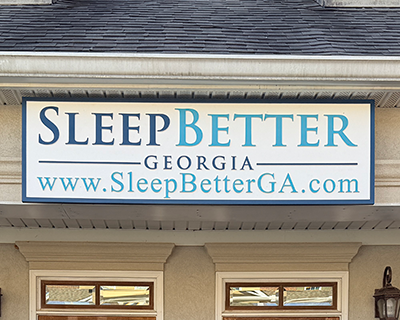
We’ve been doing a lot of routed signs lately, and it’s easy to see why: they look sharp, they hold up, and they’re one of the simplest ways to get a truly custom sign without going all-in on fully fabricated dimensional letters.
If you’re in Marietta, GA (or anywhere around metro Atlanta and North Georgia) and you’re comparing sign options, here’s a plain-English breakdown of routed signage.
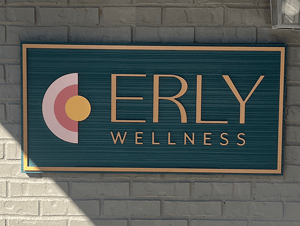
A routed sign starts as a solid panel. We use a CNC router to cut around your lettering and logo with the background recessed. We carve the letters into the sign. Sometimes the letters are cut all the way through. Other times, they’re in with a V-groove or a shallower engraved cut. Either way, you end up with a sign that has depth and definition built right into it.
That’s why routed signs photograph so well. Even before you add fancy lighting, the shadows and edges give it a dimensional look.
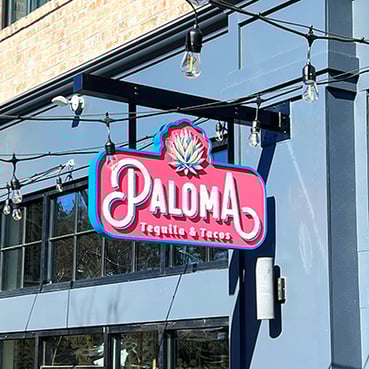
A lot of customers want a sign that feels permanent and professional, but they don’t want to overbuild it. Routed signage hits that middle ground.
It gives you a high-end look, it’s flexible enough for logos and custom shapes, and it’s a great option when you want a single, clean sign panel that’s straightforward to install.
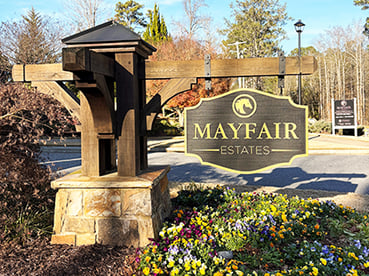
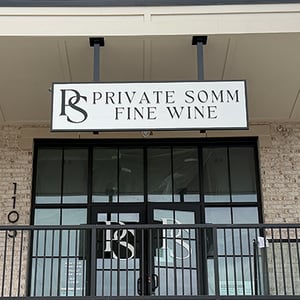
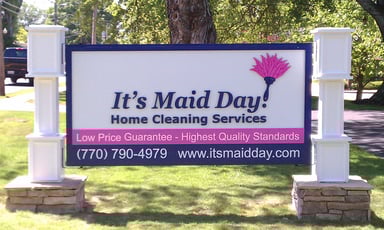
Routed signage shows up in more places than most people realize. You’ll see it on monument signs at entrances, on building identification signs, and in lobbies where businesses want their branding to feel polished the moment you walk in.
It also works really well for directional signs and wayfinding—especially when you need the message to stay readable and consistent across a property. The part that really changes the look: material + finish
Two routed signs can have the exact same layout and still look totally different depending on what they’re made from and how they’re finished.
For a classic carved look, HDU is a common choice. For a cleaner, modern feel, aluminum composite panels are popular. For interior applications (or protected areas), PVC, HDPE, or acrylic can also be used. Trust Marietta Signs to recommend the best material and routing options for your signs.
Then there’s the finish. Paint choices, color fills, and sheen (matte vs. gloss) are where the sign starts to feel truly “yours.” If you’ve ever seen routed lettering with a contrasting color fill that looks razor sharp—that’s the finish doing the heavy lifting.
If you’re comparing options, here’s the easiest way to think about it.
Routed signage is great when you want the design built into a panel—clean, durable, and easy to maintain. Dimensional letters are great when you want the letters to stand off the wall for deeper shadows, or when you’re planning illumination like channel letters.
Both can look fantastic. It just depends on the surface you’re mounting to, how far away people will be reading the sign, and the overall style you’re going for.
For exterior signs, permitting is an important part of the process required by the city or county where you are located. Marietta Signs is full-service—design, permitting, fabrication, and installation—so you don’t have to coordinate multiple vendors or guess your way through requirements.
If you’re considering routed signage in Marietta, metro Atlanta, or North Georgia, we’d love to help you figure out the best approach for your location and budget.
Call Marietta Signs at 770-435-4141 to talk through options, or reach out through our website to request a quote.
CNC Routed 3-D Signs are the perfect signs because of their high customizability. These signs are...